Products Electromagnetic Flow Meters
Electromagnetic Flow Meters
Electromagnetic flow meters (also called mag meters or magnetic meters), are volumetric flow meters which do not have any moving parts to wear, reducing the need for maintenance or replacement. Our mag meters have an accuracy over a wide flow range can be as good as ± 0.5% of flow rate or better.
McCrometer has over 65 years’ experience in flow measurement and is a global leader in electromagnetic flow meters. We are committed to innovative solutions and the highest possible quality in flow instrumentation.
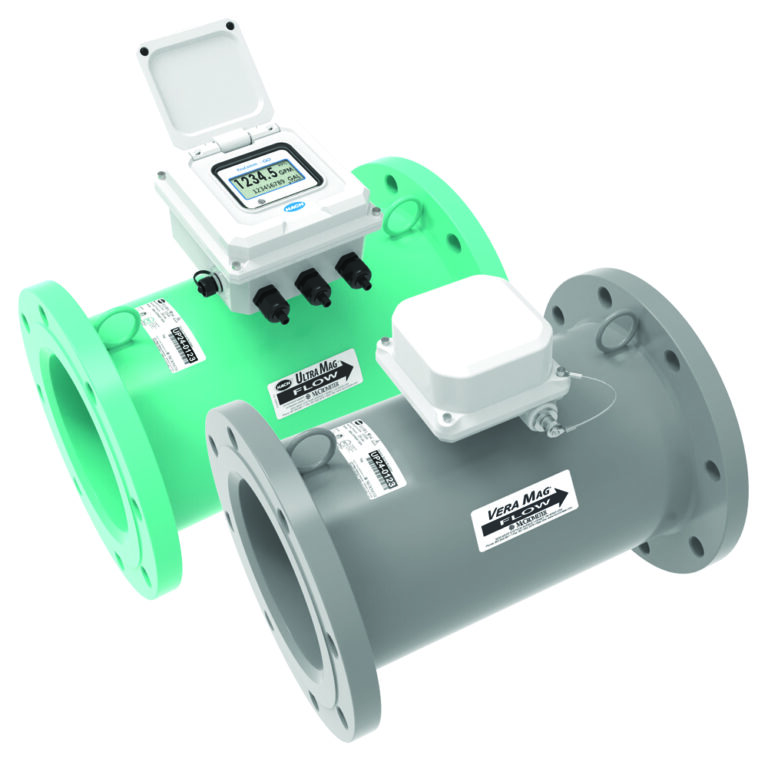
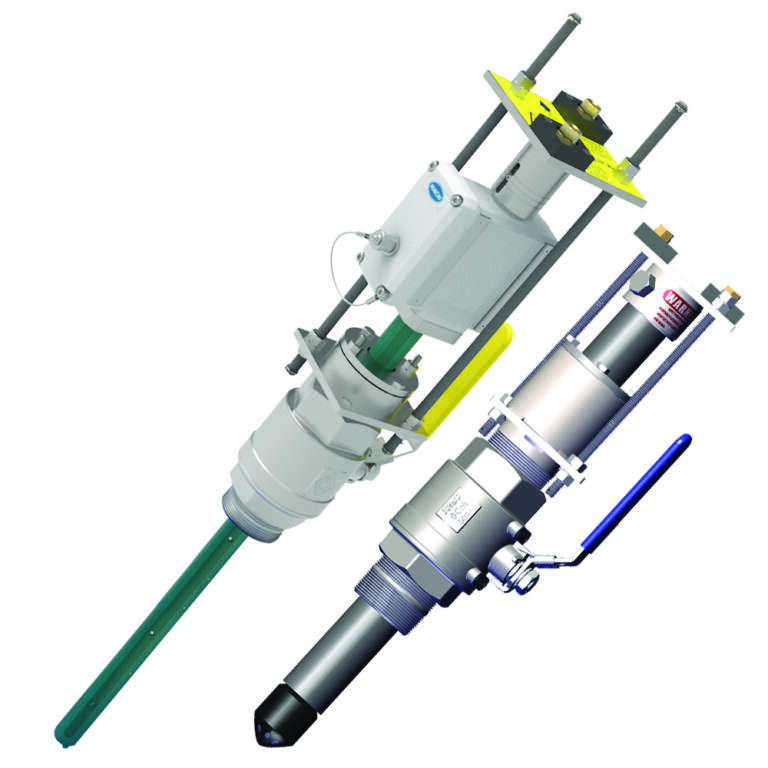
We offer a range of full bore and insertion-style electromagnetic meters – suitable for agriculture, municipal, industrial, and even oil and gas applications.
Mag meters are commonly used for water-based liquids, but some models can also measure mixed media like slurries and sludge.
Mag Meter Product Suite

Our Mag Meters are Known For:
Durability: Our electromagnetic meters come with a variety of warranties, because they’ve been tested to the industry’s highest standards.
Innovation: McCrometer has been developing solutions for our customers and improving flow meters since 1955.
Quality: McCrometer is a global specialist. We design, manufacture, install, and test all of our own flow meters.
How do Electromagnetic Flow Meters Work?
Mag meters operate under the principle of Faraday’s Law of Electromagnetic Induction to measure liquid velocity. The principle of operation states that a conductor moving through a magnetic field produces an electric signal within the conductor, which is directly proportional to the velocity of the water moving through the field.
As fluid flows through the magnetic field, conductive particles in the fluid create changes in voltage across the magnetic field. This variation is used to measure and calculate the velocity of water flow through the pipe.
Video
Mag Meter FAQs
What industries are best suited for electromagnetic flow meters?
Magnetic flow meters can work in almost any water-based use case, but they provide special value in a few specific industries:
- Agriculture : Mag meters are a favorite in agriculture, especially for irrigation purposes. The fact that they include no moving parts means they work reliably in the field with no oversight or preventive maintenance needed.
- Wastewater : Where debris can hinder and damage other types of meters, electromagnetic meters actually require some sediment and particulates, making them ideal for wastewater solutions.
- Drinking water : Flow meters involved in municipal drinking water facilities need to earn NSF-61 certification to ensure their safety. Mag meters, like the Dura Mag and Ultra Mag flanged flow meters, can meet these requirements.
- Cooling water : Cooling towers require +0.5% accuracy, low-maintenance solutions. Electromagnetic meters can meet these requirements and can also be installed without interrupting service.
- Industrial : Electromagnetic meters are great for other industrial settings too, as they often qualify for Class 1, Division 2 classifications for hazardous areas.
As fluid flows through the magnetic field, conductive particles in the fluid create changes in voltage across the magnetic field. This variation is used to measure and calculate the velocity of water flow through the pipe.
What else do I need to know about electromagnetic flow meters?
It’s easy to see why mag meters are a lot of engineers’ favorite flow meters, but they’re not perfect for every setting. Electromagnetic meters are best suited for fluids with a conductivity that is 20 ohm/cm or higher. That means they’re not the best for:
- Low velocity applications
- Petroleum-based fluids, like oil