
Stormwater drainage systems, while similar to and often combined with wastewater conveyance systems, have independent and distinctive challenges that complicate efficient pipeline management.
Stormwater, most often composed of rainwater runoff, irrigation runoff, melting snow and ice, and surface water runoff, is mostly unpolluted and thus not treated like wastewater. However, as rainwater and other surface water flow through urban areas like streets and landscaped areas, it can pick up oils, grease, debris, sediment, and other contaminants. Sometimes, conveyance systems with retention basins or infiltration facilities will partially treat flows to reduce contaminants.
Treated or untreated runoff is routed to receiving waters such as lakes, rivers, regional watersheds, or the ocean, a process often highly regulated by municipalities and water authorities.
Stormwater is usually regulated at the source and not the outlet; regulatory authorities are concerned with pollutants and water quality, not volume or flow rates. Unlike wastewater and drinking water, municipalities are not often compelled to meter stormwater flow for regulatory reasons.
Are your current flow solutions keeping pace with your operational and regulatory requirements?
Operating efficient stormwater drainage systems is a challenge that stormwater engineers have faced despite improvements in infrastructure and resources. Critical actions like routine maintenance and system upgrades can overwhelm municipalities and transportation departments facing workforce and budget shortages. Addressing these issues requires coordinated planning, strategic oversight, and most importantly, investment in innovative technology. Implementing flow meters across stormwater and wastewater conveyance systems allows water districts to generate the greatest beneficial outcome while still staying under budget.
Flow Meter Rentals and Sensors for Better Stormwater Management
Flow monitoring, however, is desirable when flow data directly supports research projects, total maximum daily load studies, and other temporary, targeted projects that influence decision-making.
These monitoring projects, though limited in scope, influence critical actions like routine system maintenance, system planning, and investment in infrastructure and innovative technology.
Budget constraints, competing infrastructure priorities, personnel shortages, and other challenges can hinder investment in monitoring technologies. Additionally, rapidly developing monitoring technologies and smart data systems can overwhelm municipalities and districts with limited time and resources to master and manage new software and equipment.
These challenges do not have to hinder a utility’s effective pipeline management. Instead, engineers can leverage smart sensors and wireless rentals to optimize budgets, minimize operational responsibility, and maximize actionable data for daily decision-making.
Stormwater Pipeline Flow Applications
Regulatory and scientific authorities like the California State Water Resources Control Board and the U.S. Geological Survey (USGS) detail the use cases for flow monitoring projects, noting that metering is a scientific, load-analysis tool and not regulatory in the case of stormwater management.
Flow monitoring devices such as level sensors and non-contact area velocity sensors monitor flow in locations such as:
- Storm drains
- Interceptors
- Outfalls
- Ditches/swales
- Partially full culverts
These devices help produce important data for projects focused on:
- Urban runoff
- Green infrastructure evaluation
- Wet weather event-based monitoring
- Inflow & infiltration (I&I) studies
- Flood monitoring
Flow Monitoring Technologies for Stormwater Applications
Area-Velocity Flow Monitoring
This technology measures both the velocity and depth/area in open channels to compute flow rate directly. Acoustic doppler (ultrasonic), radar plus ultrasonic depth (hybrid), or doppler velocity plus pressure sensing technologies are employed with area-velocity being the preferred method because it accounts for both changes in depth and speed, useful for storm events and surcharge conditions. It captures rapid wet-weather flow increases, supports base flow vs. wet weather events, and is useful for continuous and short-term monitoring projects.
Non-Contact/Remote Flow Sensors
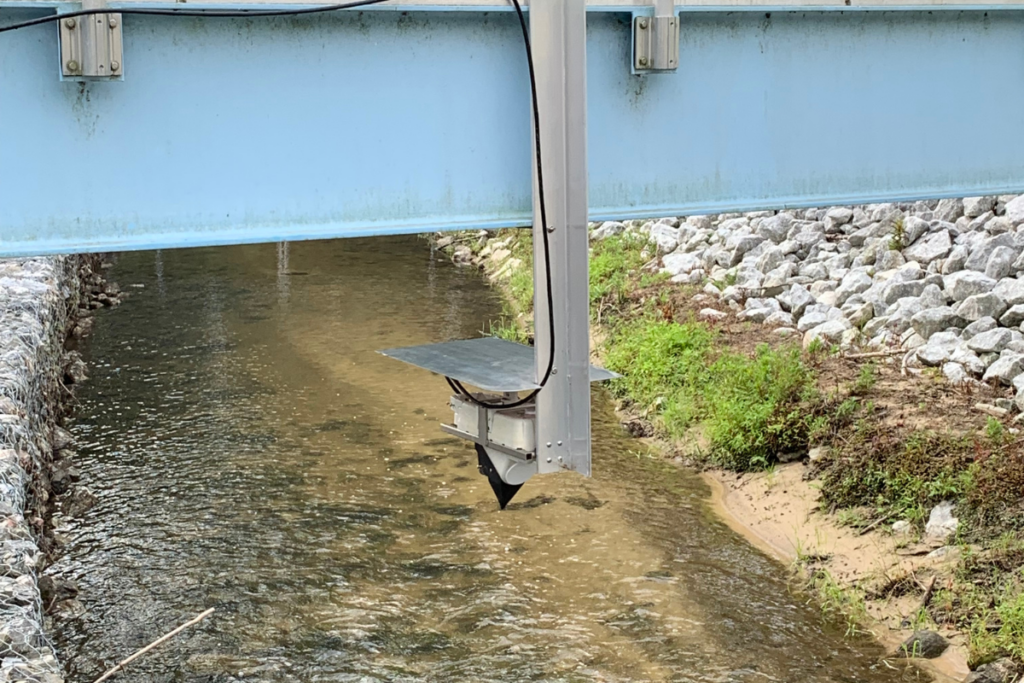
These devices measure flow without a submerged sensor, highly beneficial where fouling is a concern. Options include radar doppler velocity plus ultrasonic depth, such as McCrometer’s FLO-DAR® Area Velocity sensor, accompanied by a flow logger like the FL900 to compute and transmit actionable data. Non-contact technologies are known for their minimal required maintenance. Installation can be tricky, attempting to mount the non-contact sensors at bridge crossings or man-made structures.
Portable Velocity/Depth Flow Meters
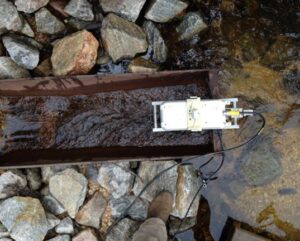
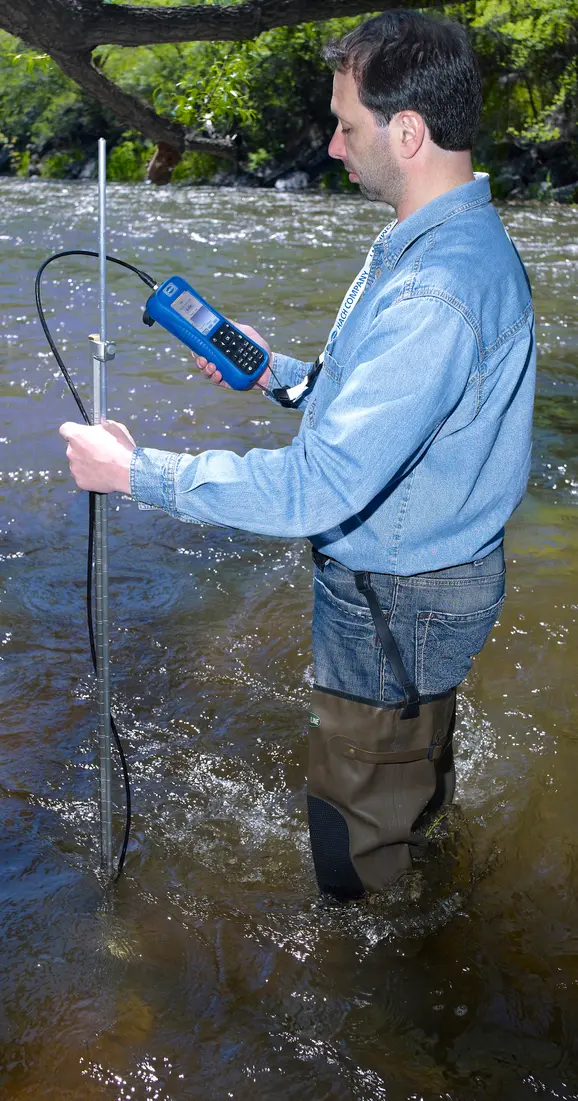
These devices are often handheld pieces of equipment for spot readings or calibration of permanent meters. These meters are useful for verifying permanently installed sensors and meters. These meters are considered cost-effective when continuous monitoring is not required and offer rapid setup and deployment.
Level/Pressure Sensors
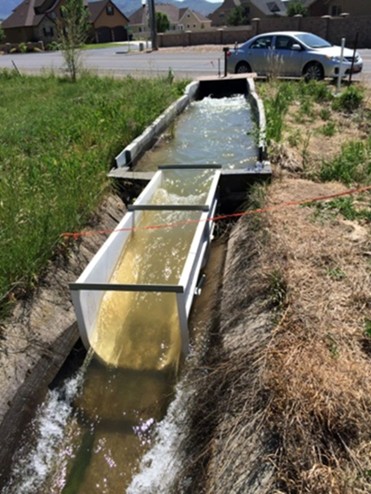
These sensors measure depth or pressure in a pipe or channel and are useful when combined with known geometry like flumes, weirs, or cross-section models to infer flow. Technology types include ultrasonic level and submerged pressure transducers. These sensors and transducers often integrate with area-velocity sensors or are used in redundant level systems. Due to fewer measurement components, installation is simpler and the operation requires lower power consumption which is ideal for remote locations.
Monitoring Device Ownership vs. Equipment Rentals
Municipalities and stormwater districts with an extensive stormwater conveyance system may find it beneficial to purchase flow monitoring equipment outright, especially if already familiar with the technology, have plans for various stormwater studies, or can utilize the same equipment for wastewater flow monitoring projects. If possible, stormwater and wastewater collection system engineers can share equipment and collaborate for monitoring purposes, minimizing costs and overhead expenses for short-term studies.
For smaller projects, temporary studies, users with a limited budget, or customers with data support needs, wireless monitoring rentals is an economic option. Users gain access to the latest monitoring equipment, have experts in data management at their disposal, and can scale up or down to meet project needs without committing to a certain technology or brand.
From an economic perspective, rentals are ideal for municipalities and districts who are budget-strapped, have received small grants for infrastructure improvements, or have been quoted inflated prices due to tariffs on purchased products.
Benefitting from Smart Meters and Sensors
The American Water Works Association (AWWA) 2026 State of the Water Industry lists infrastructure renewal and replacement as well as financing for capital improvements as the top concerns for water professionals.
Prioritizing system improvements and maintenance on a limited budget requires great efficiency and coordinated planning. Acquiring accurate, reliable data about pipeline performance will inform daily decision-making and allow utilities and municipalities to strategize proactively, not reactively.
Implementing a smart sensor network, whether continuous monitoring or short-term studies, provides users with a baseline of scientific data to purposefully plan improvements and assess project effectiveness.
Looking for more resources like this? Subscribe to the McCrometer newsletter for technical articles, industry news, product updates, and best practices from flow measurement experts.
If you have questions about an upcoming project, our team is available to help and can provide a free quote based on your specific needs.
Author

David Brown is the Business Development Manager for Hach’s Flow Solutions by McCrometer and has more than 20 years of experience in the municipal water industry. Considered an expert in flow monitoring technology, his subject matter expertise includes collection systems and flow monitoring studies. David has spoken at various industry trade shows including WEFTEC, Water Jam, Tri-State Seminar, the NC AWWA, and more.
Email: david.brown@mccrometer.com
LinkedIn: Dave Brown | LinkedIn