
Industrial facilities producing effluent or discharge, whether directly to surface waters or indirectly to the sewer system, are regulated through local, state, or federal compliance authorities such as the EPA.
While many industrial facilities use flow meters for billing and process control, they may also be compelled to install a meter for permit compliance and legal reporting, making data integrity, accuracy, record retention, and auditability just as important as measurement accuracy.
Facilities needing to demonstrate compliance with permit reporting requirements, average or peak daily flows, daily discharge volume, or overall treatment system efficiency rely on precision flow instrumentation to provide dependable data to keep their processes operating legally.
How confident are you that your current monitoring and measurement practices provide the data needed to stay compliant and make informed operational decisions?
To ensure compliance and utilize flow data for operational efficiency, industrial facilities need to select the right technology for their applications, their wastewater flow characteristics, and overall project needs. This article will discuss the nuances of both open-channel and closed pipe measurement methods, the importance of selecting an appropriate meter and electronics, and ensuring data integrity and integration for compliance and permitting purposes.
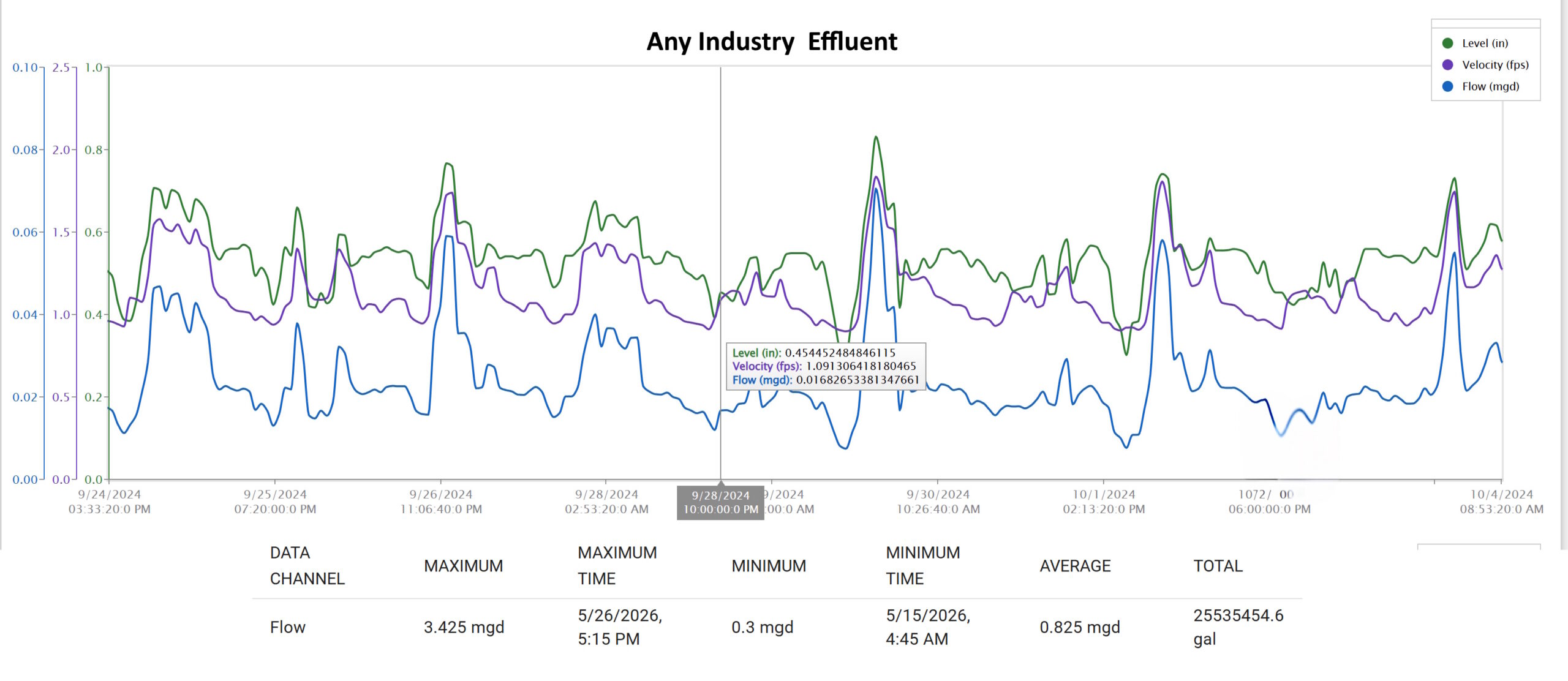
Open Channel Monitoring for Discharge and Effluent
Outside of process control, flow measurement is necessary for determining pollutant loadings and ensuring regulatory compliance under the Clean Water Act. Accurate, dependable flow data impacts permit reporting and enforcement, keeping industrial facilities compliant and helping to maximize operational service time.
While water quality-based effluent limits exist to manage the pollutants exposed to natural waterways and publicly owned treatment works (POTW), there are also strict effluent limitations and standards for total daily discharge volume as well.
Common open channel measurement applications and installations include effluent outfalls, manholes, and ditches. Different pipe and flow conditions necessitate different measurement devices. Open channel applications often depend on three main technologies for measurement data:
1. Weirs: these devices measure water height over a structure to estimate flow. Weirs require ideal hydraulic conditions such as uniform flow to produce accurate readings. While typically a low-cost option offering fast installation and deployment with minimal disruption to pipeline service, weirs are susceptible to debris buildup, limited to specific flow ranges and conditions, and not easily adaptable once installed.
2. Flumes: these devices measure flow by constricting and shaping the channel so the water level at a specific point directly correlates to flow rate, allowing it to be calculated from depth measurements. They are often selected due to minimal maintenance requirements, industry popularity, and EPA acceptance. Flumes are sensitive to changes in flow conditions, and since they assume stable hydraulics, accuracy can be affected. Additionally, flumes require cutting into discharge lines and require the pipeline to shut down for installation and maintenance of the primary element, which may affect the facility’s up time and efficiency.
3. Area velocity: these devices, such as McCrometer’s FLO-DAR®, operate by measuring the flow’s velocity and liquid depth and combining these values with the channel geometry to calculate flow rate using the continuity equation. Radar-based devices easily tolerate solids, foam, and turbulence that normally disrupt head-based devices like flumes and weirs. Industrial discharge rarely meets the hydraulic assumptions required for flumes or weirs, so direct velocity and level measurement provide more reliable data. These sensors provide traceable, continuous data for regulatory reporting without relying on assumptions inherent in flume and weir calculations. However, in very clean or low-velocity industrial flows, flumes and weirs can outperform velocity-based systems because they do not rely on particle detection and/or have minimum velocity limitations.
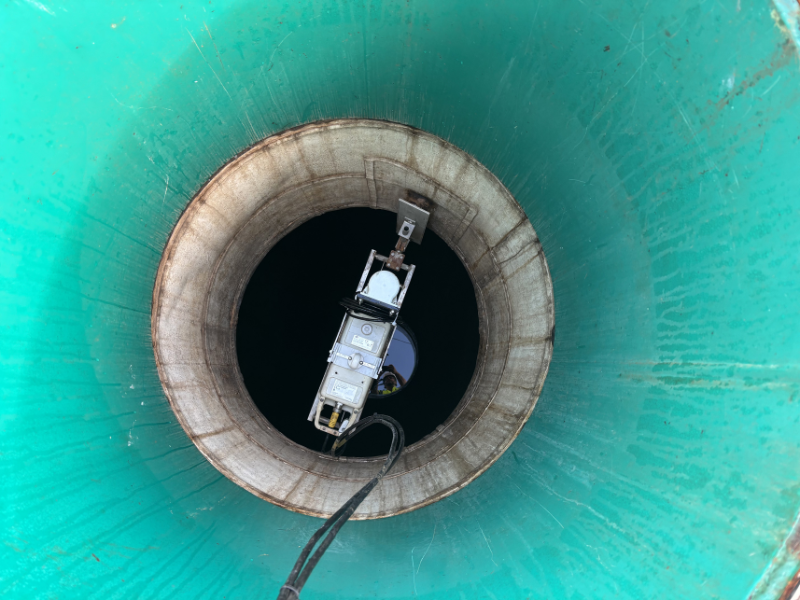
By investing in the right open channel monitoring devices, industrial facilities can install flow monitoring without shutting down production or modifying discharge structures.
Additionally, since industrial effluent typically contains grease, sludge, or corrosive chemicals, selecting a non-contact device will minimize necessary maintenance and reduce the chance of product fouling and missed data recording. The right flow monitoring tool offers reliable measurement in variable discharge conditions, providing defensible data for permitting and compliance.
That said, not all flow instrumentation is treated equally. Industrial facilities need to select the right technology for their applications, their wastewater flow characteristics, and overall project needs.
Closed-Pipe Flow Meters for Effluent and Discharge
While open channel flow monitoring is most common for final discharge points in many industries, many facilities transport wastewater in closed pipes throughout their process.
Applications such as process wastewater, pumped discharge lines, cooling water return lines, chemical manufacturing drains, and pretreatment system inflows are most often pressurized, closed-pipe flow monitoring locations.
Compared to open-channel systems, full-pipe applications provide higher accuracy, less sensitivity to downstream conditions, fewer hydraulic uncertainties, and easier integration to control systems.
Some of the more common technologies include:
Full-bore electromagnetic meters: Commonly referred to as mag meters, these devices operate on Faraday’s Law of Electromagnetic Induction. When a conductive liquid moves through a magnetic field, a voltage is produced that is proportionate to the flow velocity. A highly accurate solution, mag meters have no moving parts, handle dirty, corrosive flows with ease, and often require minimal straight-run piping. The full-bore mag, such as McCrometer’s Ultra Mag®, is a durable and popular choice for effluent applications, but is not ideal for pure water flows, such as in reverse osmosis applications, or facilities wanting to avoid process downtime during meter installation and maintenance.
Insertion style electromagnetic meters: Operating on the same technology principle as the full-bore version, the insertion mag offers the utmost in cost effectiveness and convenience. The hot-tap capability of the insertion mag eliminates downtime for facilities, as the meter can be installed and removed for maintenance without shutting down the pipeline. Additionally, insertion mags like McCrometer’s FPI Mag® require minimal straight piping for its high accuracy, making it a popular choice for flow projects with space constraints. Due to the intrusion in the pipeline, the insertion mag may not be ideal for effluent and discharge flows with significant solids or debris which may interfere with the electrodes on the sensor rod.
Ultrasonic meters: Transit-time and Doppler ultrasonic meters are often selected for effluent and discharge applications due to the non-invasive technology and their ability to install and maintain without process shutdown. The transit-time ultrasonic is better for cleaner wastewater flows while the Doppler version is ideal for sludge, slurries, and other flows with debris and some level of solids. Both ultrasonics are sensitive to changes in wastewater flow characteristics and may offer lower accuracy than full-bore mag meters.
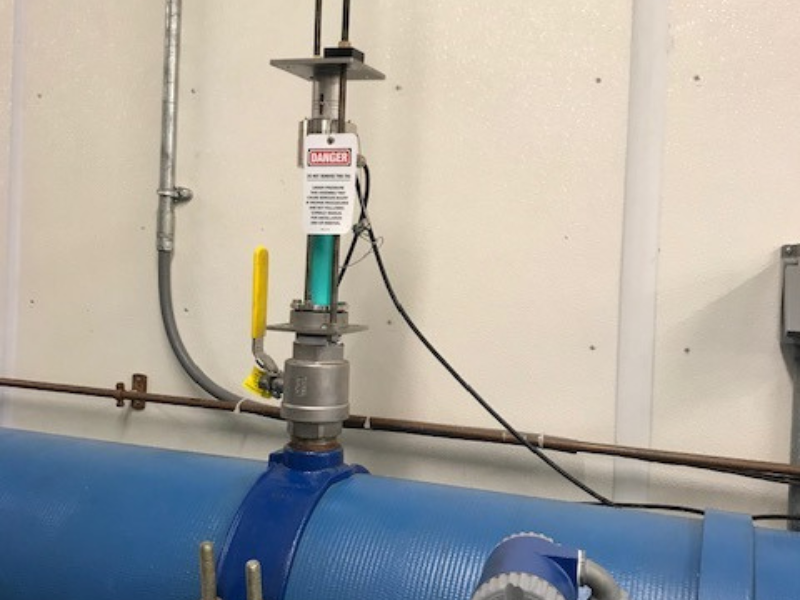
All three popular closed-pipe measurement options are ideal for specific applications, process flow conditions, and project requirements. While the technology of each solution’s primary element is of foremost concern, it is just as critical to select a flow measurement solution based on its data resources and integration abilities.
Ensuring Data Integrity for Compliance and Permitting
A flow meter is only as good as the data it provides, which is accomplished only through the “brains” of the meter itself – the electronics. Often referred to as a transmitter or converter, meter and sensor electronics contain data recording and transmission capabilities that allow for system integration, monitoring, and compliance. When selecting a meter and electronics, consider the importance of the following:
Communication protocols: Whether Modbus, Profibus, 4-20mA, HART, or another output option, ensure that the electronics offer the communication protocol needed for data transmission. Additionally, if project locations are remote, the addition of telemetry as a data transmission option may be beneficial.
Data recording: The existence of a datalogger may provide additional peace of mind by ensuring all data is recorded within the measurement unit in addition to the usual transmission to the management system. A datalogger creates a historical flow record within the meter electronics that creates an auditable record for compliance purposes and can assist facilities in identifying potential process improvements for efficiency. McCrometer’s ProComm™ Max and ProComm™ Go offer sophisticated data recording and transmission capabilities for the Ultra Mag and FPI Mag, ideal for industrial discharge applications requiring consistent and reliable flow data.
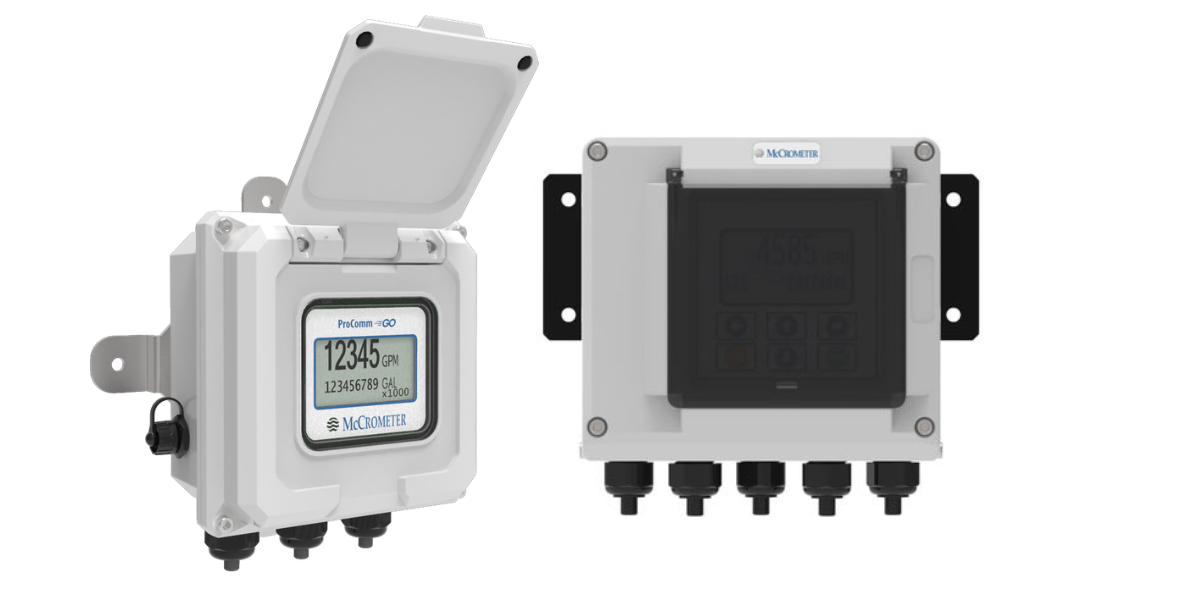
Real-time system insight: Whether an app or web platform, many users find it helpful to have access to real-time flow data at their fingertips. Flow monitoring devices that offer apps or web tools turn sensor and meter networks into a fully connected, remotely managed system that reduces field visits and keeps data in one place. Utilities can maintain consistent, traceable datasets needed for permit reporting, regulatory audits, and long-term system performance documentation.

Get the information you need to stay ahead. Subscribe to the McCrometer newsletter for the latest articles, industry developments, product announcements, and educational resources.
When you’re ready to move your flow project forward, connect with our experts for a free, no-obligation quote.
Author, Jim Caruso

Jim has nearly 30 years’ experience with flow and sampling instrumentation in both the municipal and private sector. In his various roles he has served as a sanitary chemist, field technician, technical instructor, operations manager, project manager, technical support, Applications Development Manager, and currently Business Development Manager for the Hach Flow line of products at McCrometer, Inc. His subject matter expertise includes level and velocity measurement technologies, flow monitoring technology, and automatic sampling.
LinkedIn: Jim Caruso – Sales Business Development Manager – McCrometer, Inc. | LinkedIn
Email: james.caruso@mccrometer.com