
Nearly 40 million people are serviced by combined stormwater and sewer systems (CSSs), an older style of collection system that allows wastewater, industrial waste, and stormwater to flow through the same pipes.
Although generally an outdated method of conveyance system, many regions still rely on this method due to the overwhelming cost of replacement.
Are you facing any of these CSS challenges in your organization?
Aging conveyance systems are under constant pressure. Utilities must navigate strict regulatory oversight, address capacity concerns, and keep up with essential maintenance, all while working within constrained budgets and staffing levels. The good news? Flow monitoring can help utilities stay compliant, improve operational efficiency, prioritize critical maintenance needs, and maximize every budget dollar.
Utilizing Flow Meters to Mitigate the Impact of Wet Weather Events
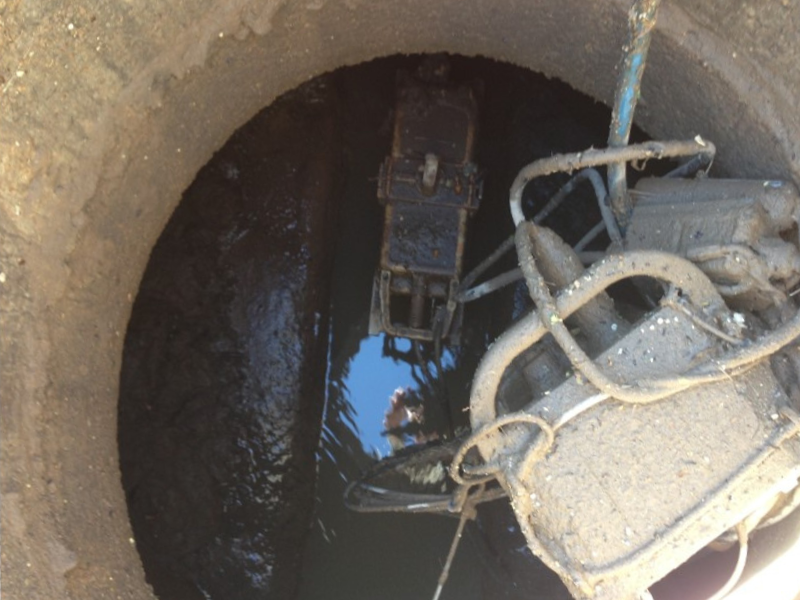
In addition to the aging infrastructure problems that similarly plague the drinking water industry, CSSs also face the challenge of capacity issues in their wastewater treatment plants (WWTPs).
During the dry season, WWTPs are often adequately able to handle the volume of wastewater, but during the wet season or during wet weather events, CSSs are designed to overflow excess volume in the conveyance system to nearby bodies of water.
These overflows, often referred to as combined sewer overflows (CSOs), pose massive risks to public health, environmental conditions, and threaten local wildlife and water quality.
The Environmental Protection Agency (EPA) has outlined nine controls as a mitigation strategy for local governments and wastewater utilities to curtail CSOs and minimize community impact. Many of these technology-based controls require accurate, timely data regarding flow volume, behavior, and trends to maximize wastewater storage, treatment plant capacity, and to quantify the efficacy of CSO control activities.
The unique challenges of combined sewer systems require special considerations for flow measurement devices, given the stringent compliance requirements with the CSO Control Policy.
Combined Sewer System Consideration: Significant Debris in Flow
Wastewater contains a significant amount of solids and particulates compared to potable water, but a combined stormwater and sewer system has an even higher degree of debris and solids in the flow.
In addition to human waste normally found in wastewater conveyance systems, CSSs also contain industrial waste, toxic materials, and anything that’s washed away in storm drains. This sheer amount of floating and submerged debris can be a challenge for engineers and technicians needing to quantify the volume entering the conveyance system, being stored in basins or tunnels, and entering the WWTP.
High accuracy and quality open channel flow monitoring equipment that can tolerate debris is necessary for utilities needing to analyze flow, evaluate the conveyance system design capacity, prioritize maintenance, and quantify CSOs.
Certain types of open channel measurement devices may struggle to provide accurate and reliable flow readings in debris-ridden flows, such as submerged sensors. McCrometer’s submerged area velocity sensor is an acoustic Doppler sensor ideal for monitoring sites prone to pressure transducer fouling and is engineered to reduce debris buildup on the measurement element.
Other measurement types, like flumes or weirs with level sensors, are often chosen for long-term monitoring but they’re susceptible to clogging, and the primary elements can be more complex to install, posing problems for the utility.
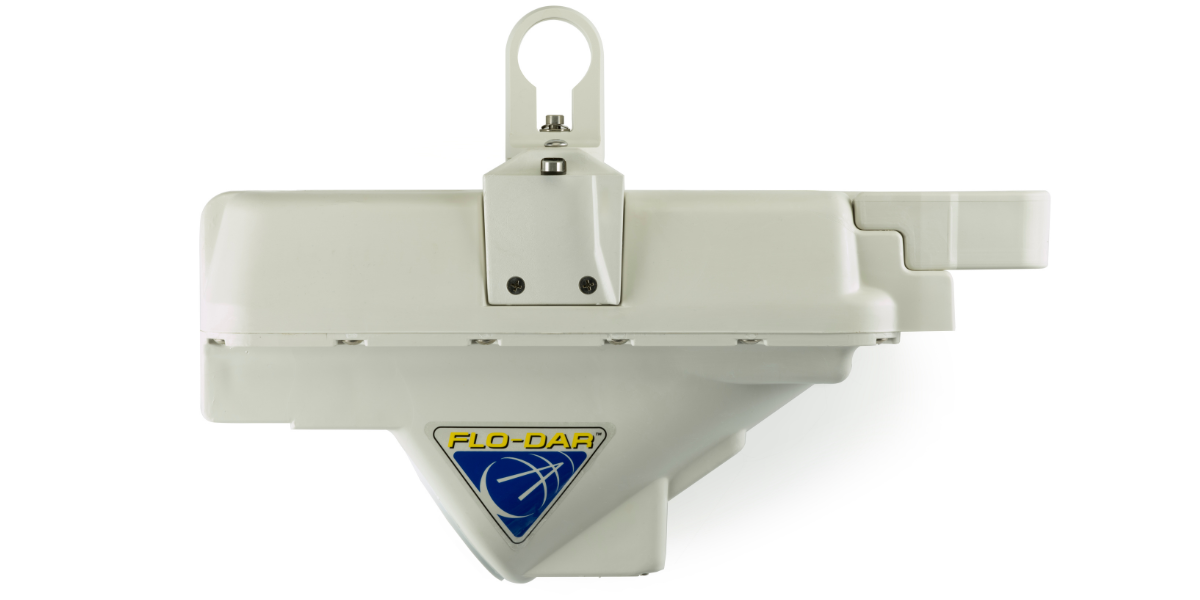
Ultimately, the measurement technology with the highest success rate in combined systems is a non-contact device such as the FLO-DAR® Area Velocity sensor with the ability to measure both level and velocity. As it has no contact with the flow, installation and routine maintenance are simpler, safer, and measurement readings are more reliable as sensor fouling is almost nonexistent.
Combined Sewer System Consideration: Surcharging and Pipe Size
Surcharging can be caused by a few commonalities in CSSs, such as poor maintenance or blockages, wet weather events, inadequate pipe sizing, and more. Large diameter pipe sizes may be in place at certain points within the combined system, such as trunk lines, storage tunnels, or the outfall/discharge points.
For utilities needing to measure flow at these critical junctions, pipe diameters spanning 24” – 120” or greater can be a challenge for open channel flow meters to obtain accurate readings. Large pipelines are often in place to account for peak flow, not just average flow, and certainly not dry season flows, which might leave the pipeline with a shallow flow that is hard to read.
Additionally, some non-contact meters mounted at the top of a large pipe or channel may have difficulty reading the flow at such a long distance. Large pipes may also have more complex issues such as mist and foam which can give false readings and skew data.
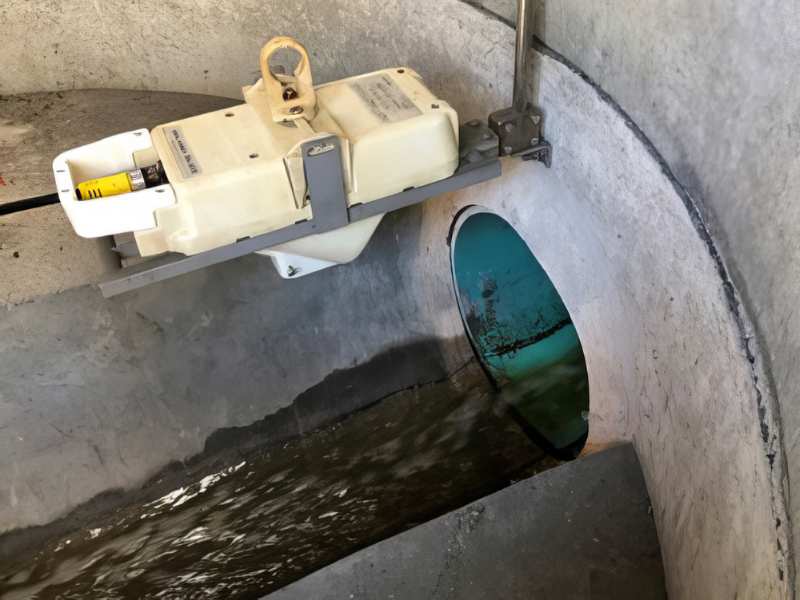
On the opposite end of the spectrum, surcharging flows, especially containing such a high level of debris, can foul sensors and cause large errors or even total flow data gaps as well. Flow equipment that was meant to capture lower flow levels in large open channels may stop working properly, leaving utilities with zero insight into critical pipeline events. This leaves CSSs exposed to noncompliance with the EPA’s nine controls for combined systems.
To account for the unique design specifications of a combined sewer system, utilities should invest in open channel flow measurement devices that can provide accurate readings at long distances as well as offer multiple technologies within one measurement device.
For instance, an ultrasonic device may not handle mist and steam in a large pipe during low flow, but a device that offers area velocity measurement, level, plus pressure transducers for surcharged depth cover all aspects of the chaotic, turbulent flow in a large combined system pipe.
When selecting a flow monitoring device for a combined system, especially at application points prone to surcharge and CSOs, consider the sophistication of the device’s alarms, real-time data transmission capabilities, and overall accuracy and reliability of the sensor readings.
Instrumentation prone to errors in dynamic systems such as CSSs may transmit data indicating a false overflow, causing utilities to mobilize a crew to the location and waste time and maintenance dollars.
Investing in flow devices, such as the FLO-DAR flow sensor, with field-proven accuracy in CSS applications provides reassurance of accurate metering in even the most challenging projects.
Flow devices assist utilities with long term monitoring to develop a baseline for performance, identify trends, and pinpoint problems within the pipeline. Consider the need for device alarms during product selection. In addition to minor alarms such as low battery or routine maintenance, certain open channel devices also have alarms that can notify utilities of impending overflows.
Dynamic data logging capabilities can also benefit utilities needing to adjust the rate of data transmission, helpful for seasonality or impending wet weather events when technicians may want to record data in shorter increments.
Combined Sewer System Consideration: Installation and Maintenance
Installation and maintenance for wastewater conveyance systems can pose safety issues, community disruptions, and logistical challenges that require confined space entry and service crew time and budget. In combined systems with large pipe diameters and turbulent flow full of debris, installation and maintenance challenges increase.
To maximize efficiency and success of sensor equipment, it’s recommended to contract the manufacturer or certified representative to perform the installation, setup, and ongoing maintenance of the equipment.
Procuring open channel flow equipment but not deploying it correctly is a waste of time and money. When actionable data is critical, it’s important to ensure that the equipment responsible for that data recording and transmission is functioning properly.
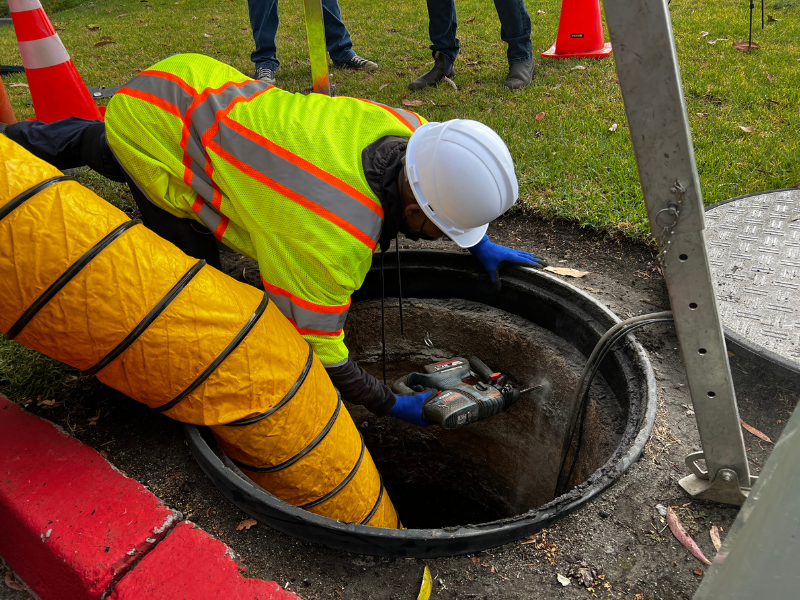
A contracted expert on flow monitoring equipment will properly install and if necessary, calibrate the sensors and meters, as well as maintain the equipment as needed. They’re informed of best practices for equipment maintenance, such as routine desiccant cartridge replacement, and alerted to any unforeseen equipment problems that could result in a lapse of data transmission.
Getting Started with Combined System Flow Monitoring
When flow monitoring is implemented into a wastewater system, it’s often prompted by a recurring challenge afflicting the utility, such as CSS overwhelm, lift station overwhelm, or WWTP capacity issues, for example. Engineers and technicians cannot manage what isn’t being measured, so flow monitoring instrumentation is needed to equip the team with flow data for diagnostic purposes.
For any water or wastewater utility, there’s almost always more maintenance needs than there is time, personnel, and budget to tackle. Having the data to pinpoint the greatest need or the project that will have maximum impact is valuable to a utility needing to justify budget spending, infrastructure improvements, or even rate hikes.
To get started on a new flow monitoring project for a combined sewer and stormwater system, we recommend:
Start small: Feel free to invest in a small number of sensors or meters to pilot test a monitoring program. Become familiar with the technology, integrate the data into an overarching management software, and then expand the program.
Understand your project goals: It’s important to identify your flow project objectives. What does success look like? What kind of return on investment is expected? What are your flow data needs and how do you plan to utilize the data to inform decision making? Identifying these variables early on will allow you to distinguish which monitoring solutions and features are compatible with your flow project.
Engage the experts: Whether it’s an engineering firm, the equipment manufacturer, or a certified representative, an expert who is skilled and practiced in flow monitoring will be able to provide a custom solution to meet the unique needs of the utility and the project site.

Looking for more resources like this? Subscribe to the McCrometer newsletter for technical articles, industry news, product updates, and best practices from flow measurement experts.
If you have questions about an upcoming project, our team is available to help and can provide a free quote based on your specific needs.
Author, Jim Caruso

Jim has nearly 30 years’ experience with flow and sampling instrumentation in both the municipal and private sector. In his various roles he has served as a sanitary chemist, field technician, technical instructor, operations manager, project manager, technical support, Applications Development Manager, and currently Business Development Manager for the Hach Flow line of products at McCrometer, Inc. His subject matter expertise includes level and velocity measurement technologies, flow monitoring technology, and automatic sampling.
LinkedIn: Jim Caruso – Sales Business Development Manager – McCrometer, Inc. | LinkedIn
Email: james.caruso@mccrometer.com