
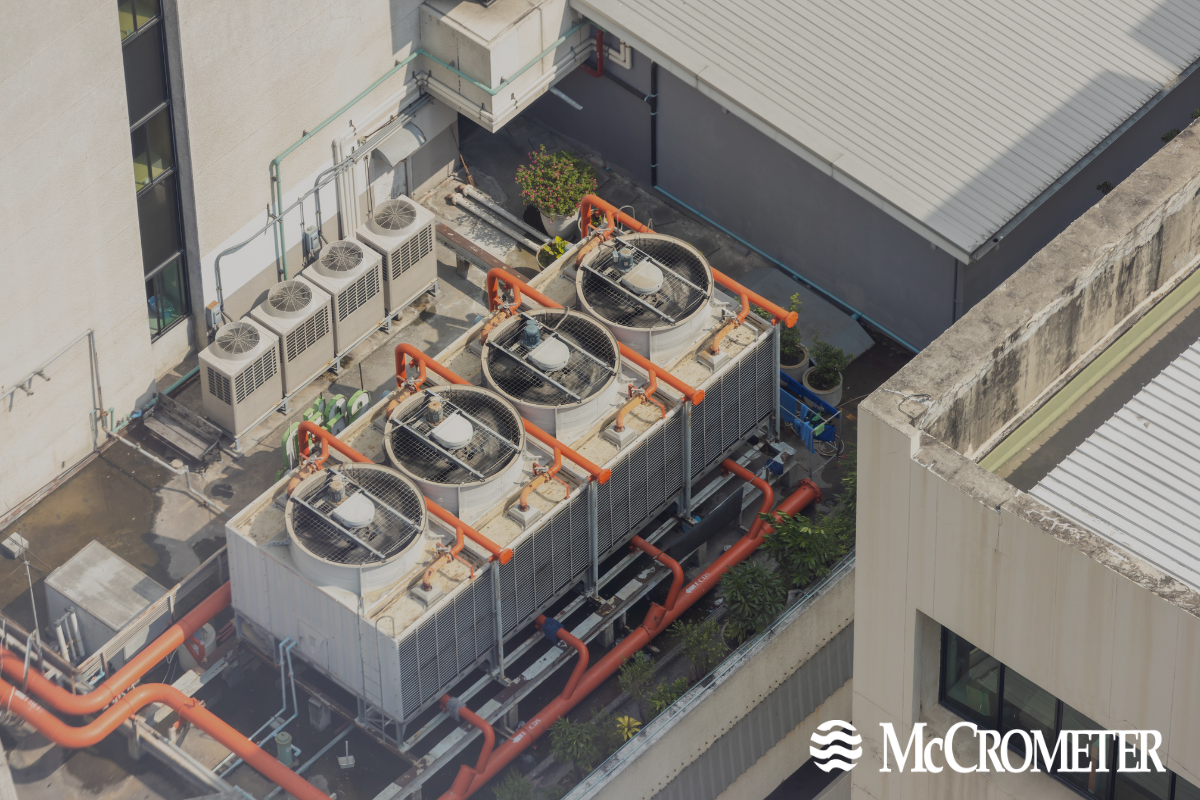
The need for data centers, also known as colocation centers or server farms, is ever expanding, as is the need for efficient and high-performing cooling systems to maintain these facilities.
Like the servers that host an abundance of customers’ data, facility managers and technicians often face information overload from the array of equipment data constantly flowing into their management software.
With so many ‘smart’ devices and equipment at their disposal, it can be daunting to decide which data to monitor and how best to utilize the data for making informed decisions about everyday operations.
Especially when tasked with the challenge of increasing cooling efficiency while expanding (and often future-proofing) operations, it can often feel as if technicians are simply troubleshooting problems and not making incremental improvements preemptively.
By implementing sophisticated flow meters enabled with automated data collection, the necessary communication outputs, and accurate and repeatable measurements, users can establish baselines for performance and forecast pipeline and equipment issues – rather than diagnose problems as they occur.
A Sophisticated Meter Starts with the Transmitter
The flow meter transmitter, fondly referred to as the “brains” of the measurement instrument, harvests the flow data and transmits it to compatible management systems for monitoring and management.
So, when selecting a flow meter for a new or retrofit installation, it’s critical to ensure that the transmitter offers the communication output and data logging capabilities to benefit management needs.
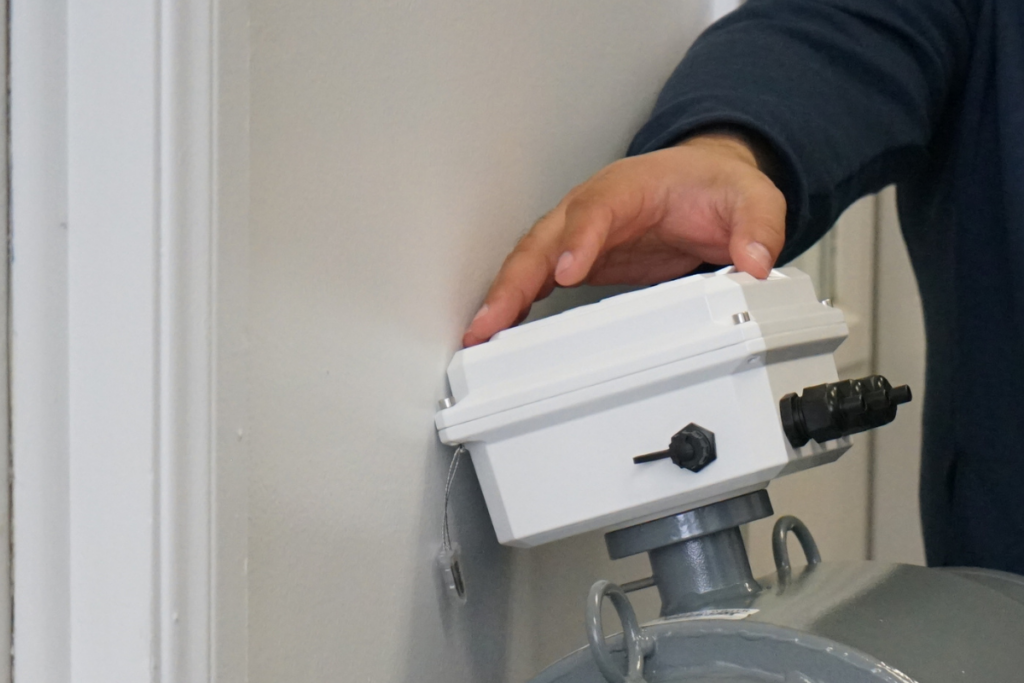
Flow meter communication outputs are categorized based on how they transmit data, such as analog, digital, and wireless signals. Analog is the traditional method and includes 4-20mA and voltage outputs. Digital protocols include pulse, Modbus, HART, Profibus, BACnet, and others. Wireless outputs can include wi-fi and telemetry. The choice for communication output rests upon user preference, data speed, environmental factors, and the management system integration.
When selecting a flow meter and transmitter, consider scalability and the future of the data center facility. Older technologies and communication outputs may pose integration challenges with cutting-edge management software and become inconvenient when trying to automate a multitude of devices for IoT networks.
Data Integrity for Efficient Flow Management
If signal is spotty or users have a history of network disruption issues, data collection may be unreliable with traditional communication outputs. Selecting a transmitter with data logging capabilities will provide data transfer reliability, continuous monitoring, and when combined with a highly accurate and repeatable meter, robust data integrity.
Dataloggers provide real-time data that can be reviewed over time, allowing users to establish a baseline for performance and identify any trends worth exploring for possible performance enhancement. When combined with a meter’s alert systems, users can pinpoint the cause of anomalies and prevent the pipeline behavior in the future.
After establishing a baseline for flow, technicians can utilize alert systems and set thresholds in management software to automate monitoring of cooling pipelines, clearing time to monitor or manage other operations.
This also takes a monitoring system from reactionary to preventative, allowing technicians to make improvements in a cooling system that minimizes resource waste and maximizes the facility’s bottom line.
Get Better Control of Data Center Flow Data from the Right Flow Meter
Reliable communication outputs, automation, and integration are inconsequential without a highly accurate and repeatable flow meter to provide the measurement data. Precision flow data is extremely valuable, and only if repeatable.
Accuracy is how close a measurement is to the true flow within the pipeline, and repeatability is how consistent the readings are. This kind of reliability is what allows utility processes to be controlled and optimized, inducing efficiency.
Options for Efficient Flow Monitoring
There are many flow meter options on the market that are suitable for data center cooling operations and improving efficiency. Application specifications, integration needs, and installation requirements should be carefully considered when selecting a meter for each measurement point.
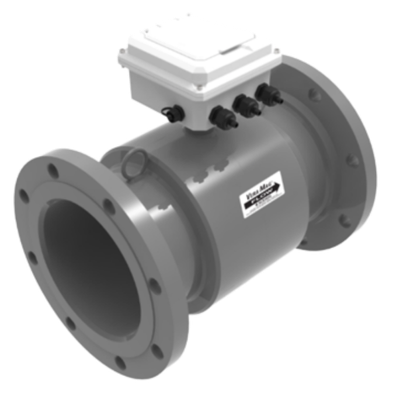
Electromagnetic (mag) technology: Mag meters, available in full bore and insertion styles, are highly accurate meters featuring no moving parts. They’re ideal for measuring chilled and cooling tower water but are also compatible in applications featuring chemical dosing and those prone to mineral and scale buildup. For data center applications, select a mag meter requiring minimal straight-run piping, for straightforward installation. McCrometer’s Vera Mag™ full-bore meter is ideal for data center cooling applications, delivering up to ±0.2% accuracy for precise cooling water monitoring and cost allocation. Its NSF-approved UltraLiner™ resists delamination and performs exceptionally well near pumps, while its no-moving-parts design ensures long-term reliability and low maintenance.
Ultrasonic technology: This non-intrusive technology makes installation and maintenance a breeze and offers accurate measurement via inline or clamp-on style. Suitable for a variety of flow media, ultrasonic meters can even measure pure water from condensers. When considering an ultrasonic, ensure the installation point is free from turbulent flow, as bubbles and an inconsistent flow profile can interfere with accurate measurement. Additionally, temperature variability, as in chiller and chiller bypass applications, may cause flow readings to drift as well.
Propeller/turbine technology: Mechanical meters like props and turbines are the most economical of the available meters, a budget-friendly option for data centers needing to invest in numerous measurement devices. These mechanical meters offer a simple, yet accurate design, simplifying DIY installation and maintenance and eliminating the need for manufacturer assistance and any associated downtime. However, the existence of moving parts means wear and tear over time, potentially requiring more frequent maintenance or replacement, affecting pipeline uptime. Nonetheless, the mechanical meter technology doesn’t affect these meters’ ability to provide data automation and smart integration. Many mechanical meters on the market are accompanied by sophisticated transmitters and telemetry options.
McCrometer’s Metering Options for Data Center Efficiency
McCrometer’s industrial suite of flow measurement solutions offers a variety of technologies suitable for measuring data center cooling applications. The Vera Mag™ 3000 and Vera Mag™ 5000 full-bore electromagnetic meters are extremely durable, reliable meters available in line sizes 1.5” – 24” (38.1mm – 609.6mm). Equipped with the UltraLiner™, the fusion-bonded epoxy guaranteed against delamination and tearing, the Vera Mag withstands corrosive flows up to 200°F. For operators and technicians requiring increased precision, the Vera Mag 5000 is accurate up to ±0.2%. Combined with minimal to no maintenance required over a long lifespan, this full-bore mag is an investment product benefitting cooling applications for the lifetime of the facility.
McCrometer’s FPI Mag® Plus 3000 and FPI Mag® Plus 5000 are insertion-style mag meters that are hot-tappable, eliminating the need to shut down a data center’s pipeline to install the meter. These powerhouse meters minimize a cooling operation’s downtime, as well as the expenses associated with a complicated installation such as cutting pipe and welding flanges. Available in line sizes 4” – 138” (101.6mm – 3505.2mm), the FPI Mag Plus is also rated up to 200°F and requires minimal straight run to achieve its accurate and repeatable readings.
