
Summary
Recent reports estimate that 1 in 5 gallons of water is lost due to real losses such as pipe leaks and bursts, and combined with apparent losses such as metering inaccuracies, non-revenue water (NRW) can cost utilities significantly year after year. The impact of aging water infrastructure and shrinking budgets leaves utilities with limited resources to audit and mitigate water loss. Insertion-style electromagnetic (mag) flow measurement devices offer a scalable, low-footprint technology providing immediate, actionable flow data insights such as volumetric losses, pressure zones, and abnormal spikes in consumption. The integration of advanced flow metering with continuous data platforms aligns with broader industry trends toward digitization, real-time network management, and sustainability. This article will cover the benefits of insertion mag technology, popular water loss applications, best practices for metering, and how well flow measurement fits into the overall IoT of smart water.
The Impact of Flow Monitoring on Water Loss
Recent reports estimate that nearly 1 in 5 gallons of water is lost due to real losses such as pipe leaks and bursts, and combined with apparent losses such as metering inaccuracies, this non-revenue water (NRW) can cost utilities significantly year over year. The impact of aging water infrastructure and shrinking budgets leaves utilities with limited resources to audit and mitigate water loss.
Insertion-style electromagnetic (mag) flow measurement devices offer a scalable, low-footprint technology providing immediate, actionable flow data insights to drinking water utilities managing leakage. This innovative measurement technology enables data-driven water loss control without requiring costly shutdowns or pipe modifications. Compared to traditional full-bore mag meters that generally increase exponentially in price as size increases, insertion mags are an economical choice for larger line size applications as they do not experience the steep cost escalation typical of full-bore technologies.
Insertion mag devices that offer easy installations, feature-rich electronics, and seamless integration with management software allow utilities to advance their real-time system management and smart water network of devices, aligning with industry trends such as digitization, AI, and machine learning tools for predictive maintenance.
The Benefits of Insertion Mag Technology
Full-pipe insertion mags, like McCrometer’s FPI Mag®, operate on Faraday’s Law of Electromagnetic Induction just as full-bore mags do, but rather than electrodes on the pipe wall, the insertion mag contains multiple electrodes measuring various points across the diameter of the pipe. This allows the insertion mag to account for various flow velocities within the cross-section of the pipeline, producing a highly accurate flow velocity.
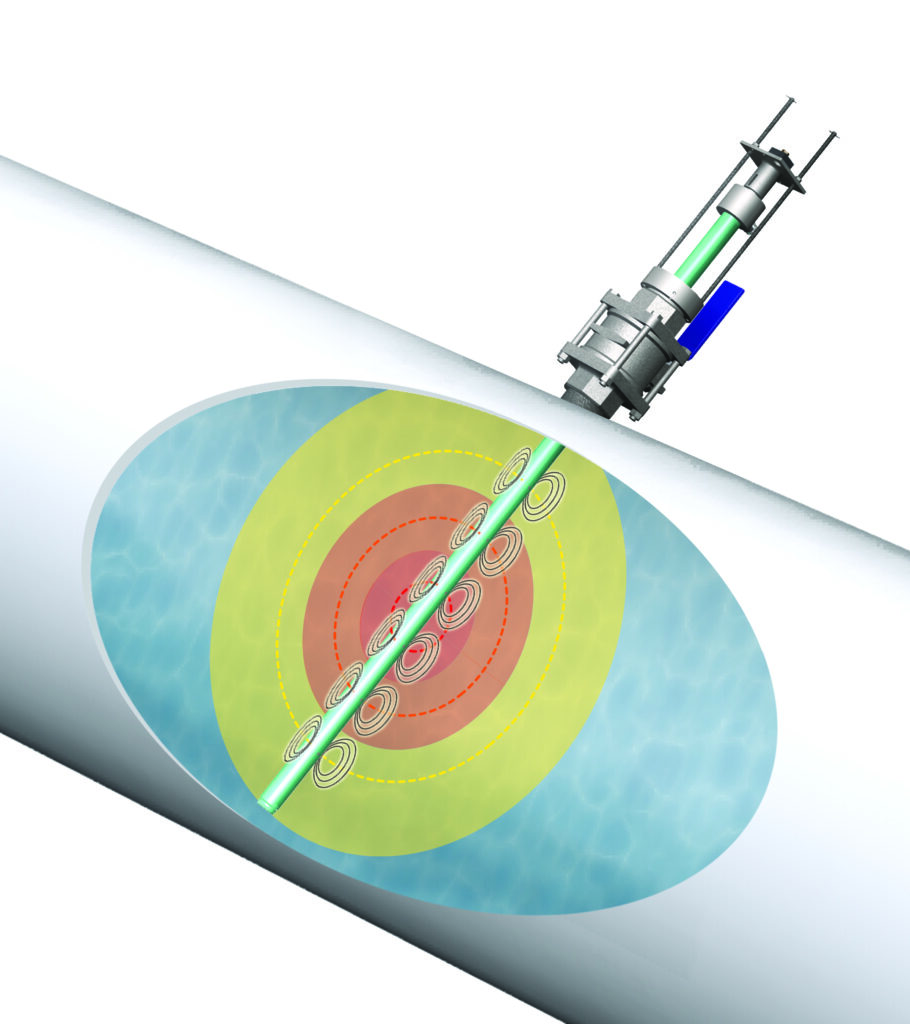
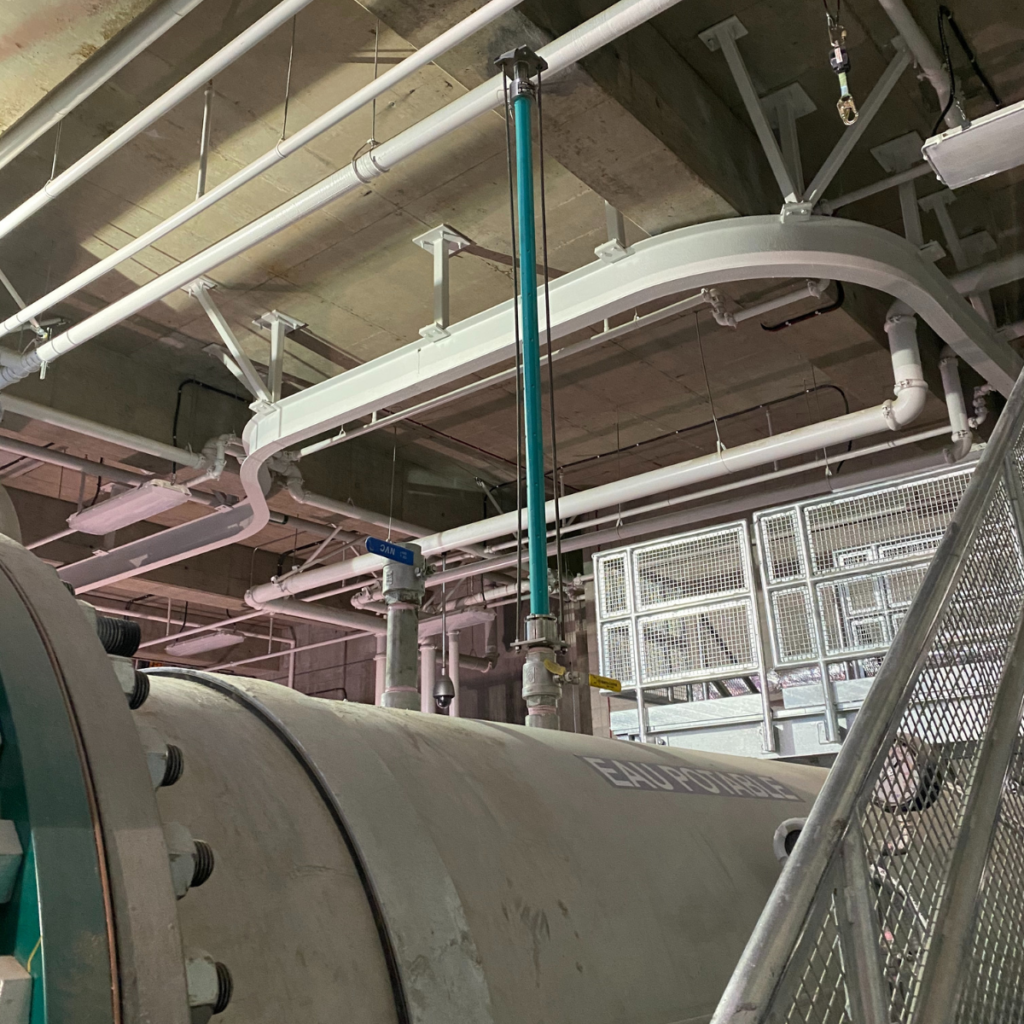
The FPI Mag’s design is lighter in weight than typical full-bore styles, requires minimal straight piping, and is hot-tappable, all of which contribute to the meter’s easy and convenient installation. This small footprint meter is able to install in tight spaces without requiring construction machinery, shutting off service to customers and dewatering pipelines, and requires less personnel and budget for installation and routine maintenance compared to full-bore mag meters.
For utilities with tough-to-meter locations, limited budgets, and personnel constraints, the insertion mag is the ideal choice for streamlined installation and setup without compromising accuracy and durability.
Insertion Mags for Water Loss Applications
The insertion mag’s ability to install without disrupting pipeline service makes it an ideal solution for a variety of locations needing to measure flow for water loss auditing, such as:
- Trunk mains
- District metered areas (DMAs)
- Distribution mains
- Surface water diversion points
- Treatment plant influent and effluent
- Storage facilities like reservoirs or elevated tanks
- Booster stations
- Operational facilities
- And more
District metering is one of the more popular applications for water loss monitoring, as utilities can compare inflow versus billed consumption within a defined area. Minimum night flow is a major indicator of hidden leakage, and any location that a utility can meter close to a billed customer (whether residential or large industrial or commercial customer) the easier it becomes to pinpoint losses.
Utilities typically will implement insertion meters to gain valuable data such as produced water versus billed water, night flow versus expected demand, pumped volume versus stored volume, and other key metrics that indicate real and apparent losses as well as unbilled consumption.
Best Practices for Metering
When beginning a water loss application flow monitoring project, there are some best practices to adhere to in order to benefit fully from the flow data.
Data acquisition, recording, and transmission: While the body of the flow meter needs to be durable and robust, the electronics are the brains of the monitoring package. Ensure that the chosen meter’s electronics come equipped with the communication protocols needed for data transmission. Additionally, an internal data logging function will ensure that if data transmission is interrupted for any reason, valuable flow data is recorded within the unit itself, preserving data continuity and integrity.
Modular power and communications capabilities: Selecting a meter with electronics that allow for in-field changes to communications protocols, system upgrades, and power options will ensure that utilities have a truly scalable solution that is future-proof to emerging technologies. It allows users flexibility with their management of flow measurement tools and data, without impacting performance.
Alarms: Many meter electronics, such as McCrometer’s ProComm™ Max and ProComm™ Go transmitters, offer alarms to notify users remotely when performance may suffer, such as high or low flow alarms, empty pipe alarms, low battery, and more. These alarms can help users pinpoint urgent maintenance, malfunctioning equipment, or help identify emergent situations before they become truly detrimental, such as pipe bursts.
Installation and operation: To guarantee correct installation and operation of an insertion flow meter, follow the manufacturer’s guidelines and the product’s installation, operation, and maintenance (IOM) manual. Many manufacturers have authorized resellers and certified service providers that are experts in the installation and setup of insertion mag meters and can be contracted as an ongoing resource for product assistance.
Location: To capture the most relevant data and meet flow project objectives, careful selection of optimal locations should be a priority. Even the best flow meter will perform poorly in bad installation locations. Too close to flow disturbances like pumps, bends, and valves will create turbulence and swirl in the flow profile and distort readings. Additionally, users should consider meter accessibility for maintenance, power needs, and flooding risk. A metering location that is ideal for its flow conditions is useless if it cannot be maintained or trusted over time. Without strategic placement, flow meters cannot effectively support water loss detection.
Flow Meters and the IoT of Water
Flow meters are a useful tool for water utilities, but they are only one of many operational tools and data inputs that utility operators use to monitor system performance, identify pipeline anomalies, and support water loss performance.
Investing in a network of smart water meters that offer highly accurate, reliable data that easily integrates with system management software allows utilities to create a scalable network of data points. These data points are a baseline for performance, with thresholds set that identify poor pipeline performance, seasonality, or user demand. Combined with AI and machine learning tools, flow data can assist with predictive maintenance and inform decision making like capacity planning.
Substantially accurate, reliable flow data from metering tools ensure that control systems like SCADA have high-integrity information to advance real-time water system management. Operators and engineers manage a bevy of sensors monitoring meters, pumps, reservoirs, tank levels, and more. Minimizing water loss and maintaining efficient operation of water conveyance systems is the ultimate goal, made easier and more convenient with the implementation of dependable flow meters.